The work area
Photograph each side of the structure or room. Mark what stays and what is expected to come out.
Small structures, outdoor features, and selective interior removal start with a clear boundary and a workable debris route.
Kemah is northeast of Alvin near Galveston Bay, with compact lots and coastal exposure that can leave exterior materials weathered or corroded.
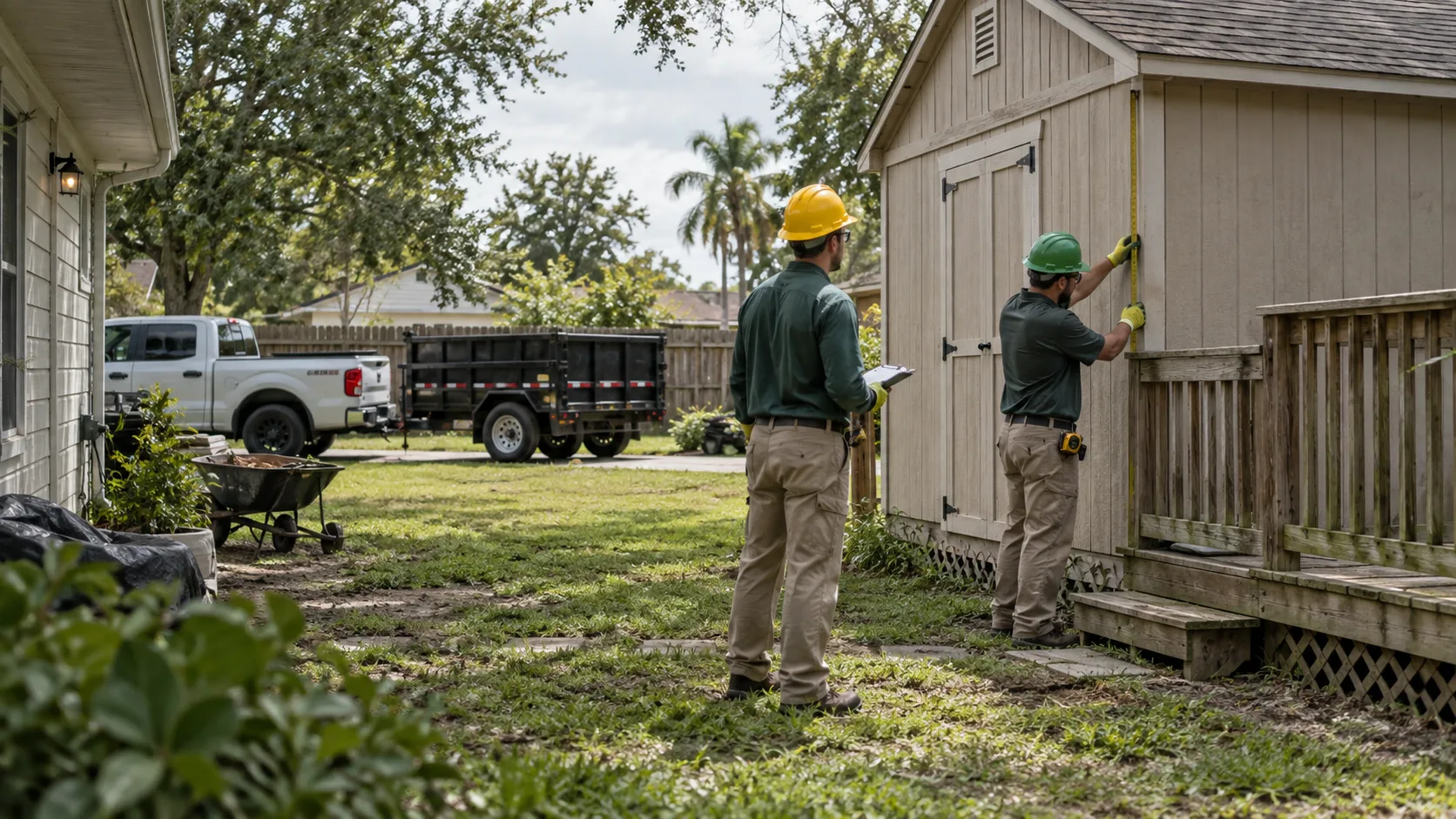
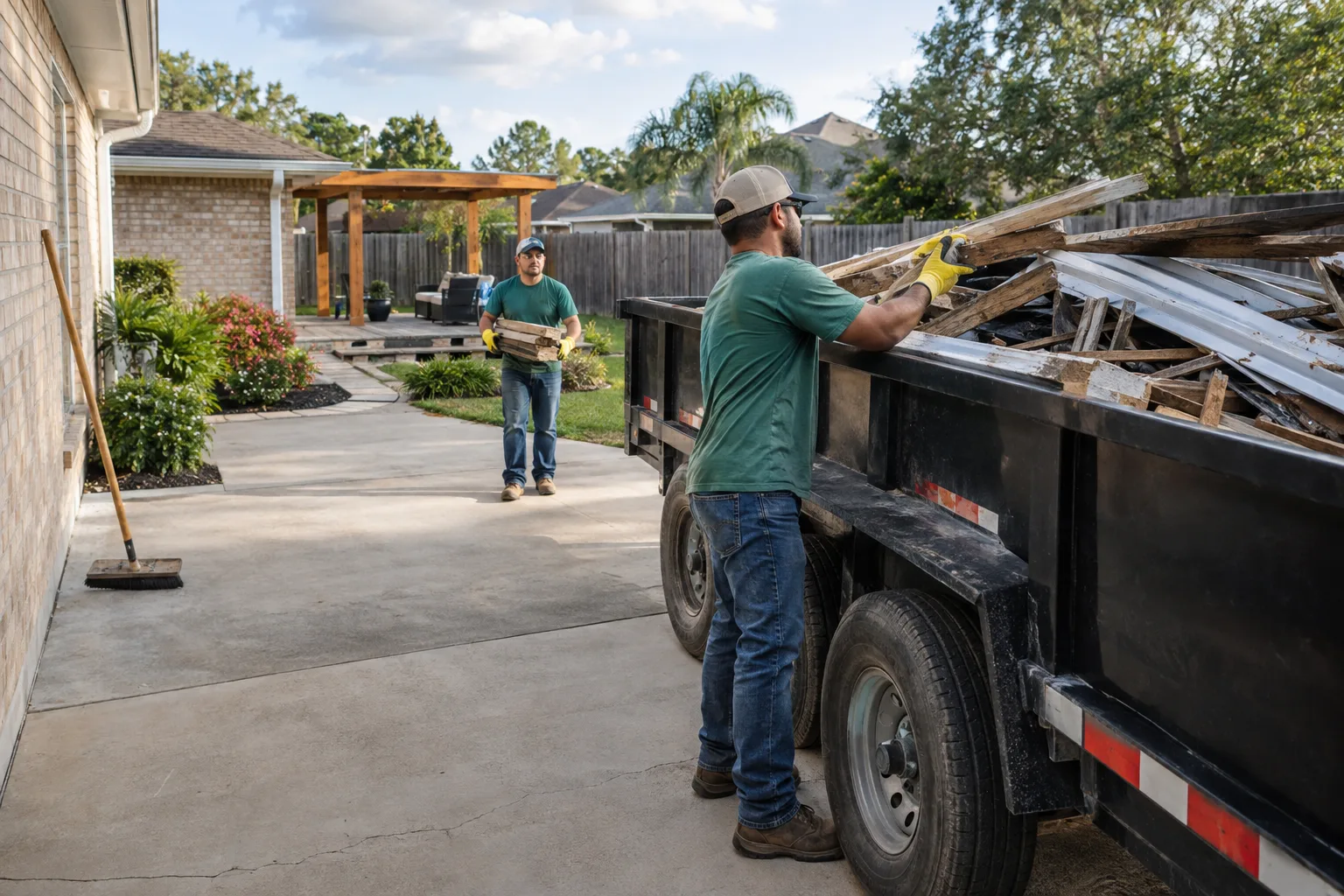
Document narrow access, neighboring structures, and brittle or corroded materials. Condition can change how safely pieces are separated and carried.
Photograph each side of the structure or room. Mark what stays and what is expected to come out.
Show gates, steps, corners, fences, landscaping, overhead clearance, and the proposed loading point.
Identify utility lines, irrigation, drainage, attached surfaces, shared access, and any property-specific work rules.
Project acceptance depends on the exact scope, access, material, hazards, and schedule. Service-area inclusion does not guarantee every demolition type.
Light demolition for small structures, outdoor features, and selective interior removal.
View scopeDismantling and haul-off for empty wood, metal, and resin storage sheds.
View scopeMethodical removal of decking, rails, framing, and agreed posts or footings.
View scopeBreakdown and haul-off for drained, safely disconnected above-ground spas.
View scopeSelective removal of non-structural finishes and fixtures for renovation preparation.
View scopeFence-panel, rail, post, and agreed footing removal with debris haul-off.
View scopeThe person approving the scope should be available to identify what stays, answer access questions, and confirm property authorization. Ask by phone whether photos can cover the first review.
Permit responsibility depends on the project and jurisdiction. Confirm requirements with the responsible local authority and record who will handle any permit before work begins.
Call with the Kemah address area, measurements, photos, and access details.